
Local SEO for Small Business: A Complete Guide for 2026
Learn how to improve local SEO for your small business in 2026 — from Google Business Profile to reviews, citations, and social media.
Kasthuri| 14 July 2026
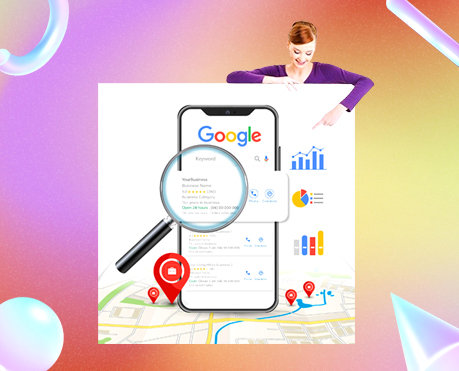
If you run a restaurant, retail store, salon, or any local business, the customers you want most are already searching for you on Google — they just might not be finding you. That’s a local SEO problem, and the good news is that most of the fixes don’t require a big budget or a technical background.
Local SEO (Search Engine Optimisation) is the process of making your business more visible in location-based search results: the map pack at the top of Google, the “near me” searches, and the city-specific queries that drive real foot traffic. This guide covers everything a small business owner needs to know to rank better locally in 2026 — step by step, without the jargon.
What Is Local SEO and Why Does It Matter?
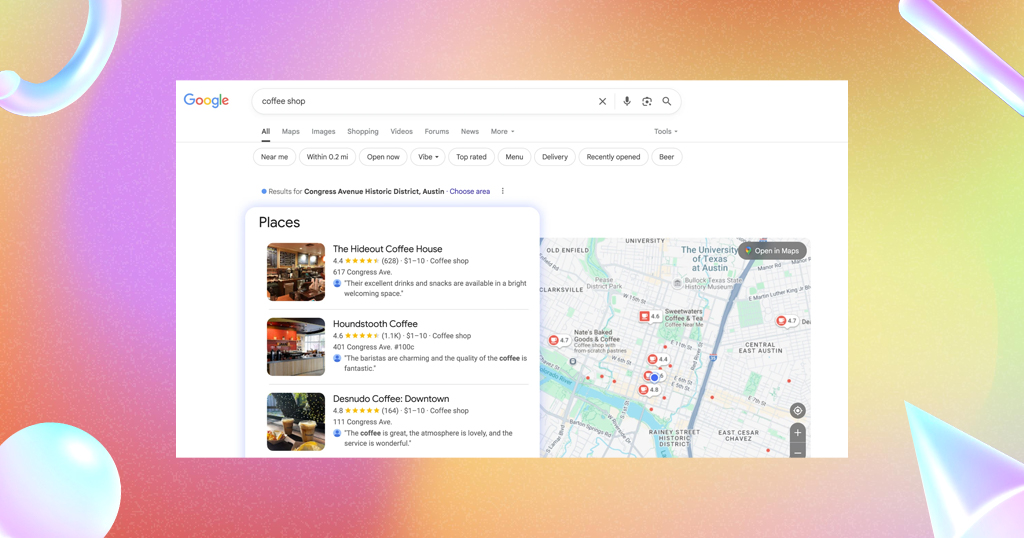
When someone types “best coffee shop near me” or “pharmacy in Bangalore” into Google, they’re not looking for a national chain’s homepage — they’re looking for the best option within a few kilometres. The results that show up in that top map section (called the Local Pack or Map Pack) are determined by local SEO signals, not just general website authority.
According to BrightLocal’s Local Consumer Review Survey 2026, the vast majority of consumers use Google to find local businesses, and more than half of all “near me” searches result in a store visit within 24 hours. That’s a staggering conversion window — and most of it goes to whichever businesses have optimised their local presence properly.
Google’s own local search ranking factors guide confirms that three core signals drive Map Pack rankings: relevance (how well your profile matches the search), distance (how close you are to the searcher), and prominence (how well-known and trusted your business is online). All three are things you can actively improve.
Step 1: Claim and Optimise Your Google Business Profile
Your Google Business Profile (formerly Google My Business) is the single most important local SEO asset you control. It’s what feeds your Map Pack listing — the star rating, photos, hours, address, and category that potential customers see before they ever visit your website.
If you haven’t claimed your profile yet, start with our step-by-step guide on how to add your business to Google — it covers everything from creating the listing to verifying ownership. Once you’re in, here’s what to optimise:
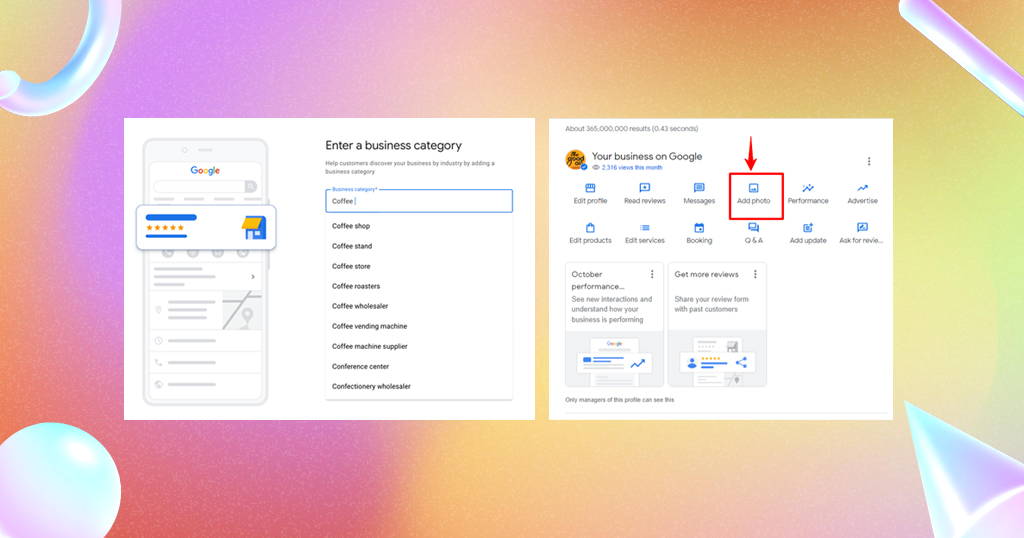
- Business category: Choose the most specific primary category available. This is the #1 ranking signal within your profile.
- Business description: Include your city or neighbourhood name naturally, along with your core service or product. Write for customers, not algorithms.
- Photos: Add a minimum of 10 high-quality photos — exterior, interior, products, team. Google’s data shows that profiles with photos get significantly more direction requests and website clicks.
- Services and attributes: Fill in every service, product, and attribute (wheelchair accessible, free Wi-Fi, outdoor seating, etc.). These feed into filtered searches most owners ignore.
Step 2: Build a Consistent Review Strategy
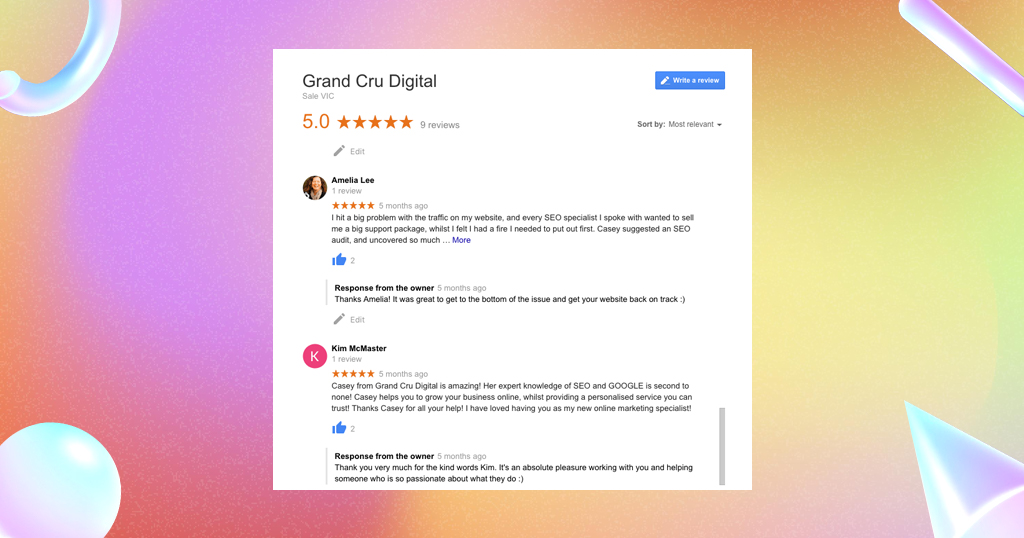
Reviews are one of the most powerful local ranking signals — and the one most small businesses manage reactively instead of proactively. Volume, recency, and response rate all influence where you appear in local search results.
The practical approach: make asking for reviews a habit rather than a campaign. A QR code at checkout, a follow-up text after an order, or a link in your receipt email can all generate a steady trickle of fresh reviews without feeling pushy. Our guide on how to get more Google reviews walks through the exact setup.
Once reviews come in, responding to every one of them — positive or negative — signals to both Google and potential customers that your business is actively managed. If you’re not sure what to write, our Google review response examples and templates give you 28+ copy-paste replies for every situation, from five-star praise to angry one-star complaints.
Step 3: Get Your NAP Consistent Across Every Directory
NAP stands for Name, Address, and Phone number — and consistency across every online directory is a foundational local SEO signal. If your business appears as “Sharma Bakery” on Google, “Sharma’s Bakery” on Justdial, and “Sharma Bakers” on Facebook, that inconsistency tells search engines your information may be unreliable.
Key directories to check and update for Indian small businesses:
- Google Business Profile
- Justdial
- Sulekha
- IndiaMart (for product-based businesses)
- Zomato and Swiggy (for restaurants and food businesses)
- Facebook Business
- Bing Places — often overlooked but still drives traffic
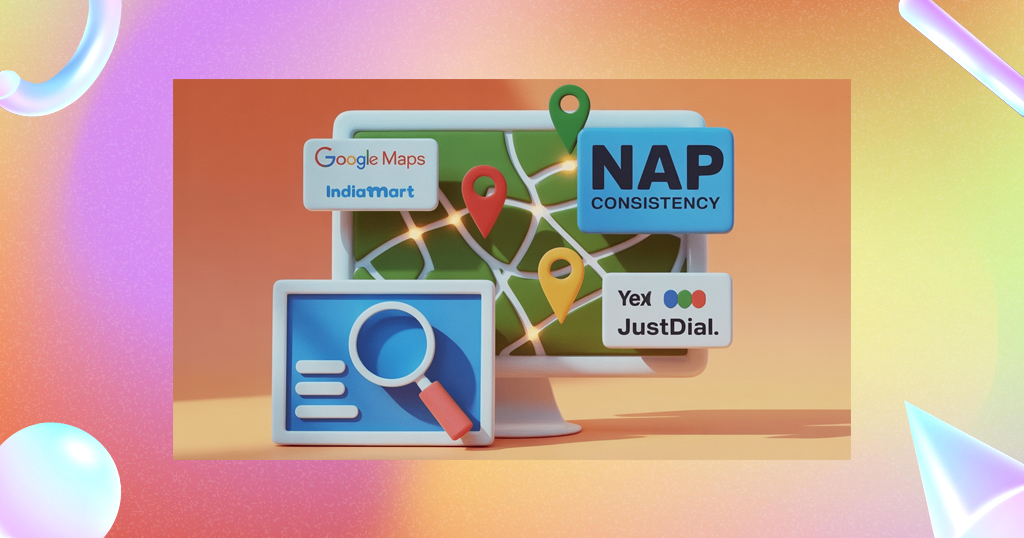
Check each one manually, or use a listing management tool to sync updates across all directories at once. Storefries’ Google Business Profile integration keeps your listings accurate without manually logging into each platform every time something changes.
Step 4: Optimise Your Website for Local Keywords
Your Google Business Profile and your website work together — neither alone is enough for strong local rankings. Your website needs to signal to Google that you’re genuinely relevant to local searches, not just listed in the area.
Key on-site local SEO actions:
- Add your city and neighbourhood to your homepage title tag, meta description, and naturally in your body copy. “Best South Indian restaurant in Koramangala, Bangalore” is far more locally targeted than just “Best South Indian restaurant.”
- Create a dedicated location page if you have more than one branch — one strong page per location with its own address, phone number, hours, and map embed.
- Embed a Google Map of your location on your Contact page. This reinforces your address to search engines and makes it easier for customers to get directions directly from your site.
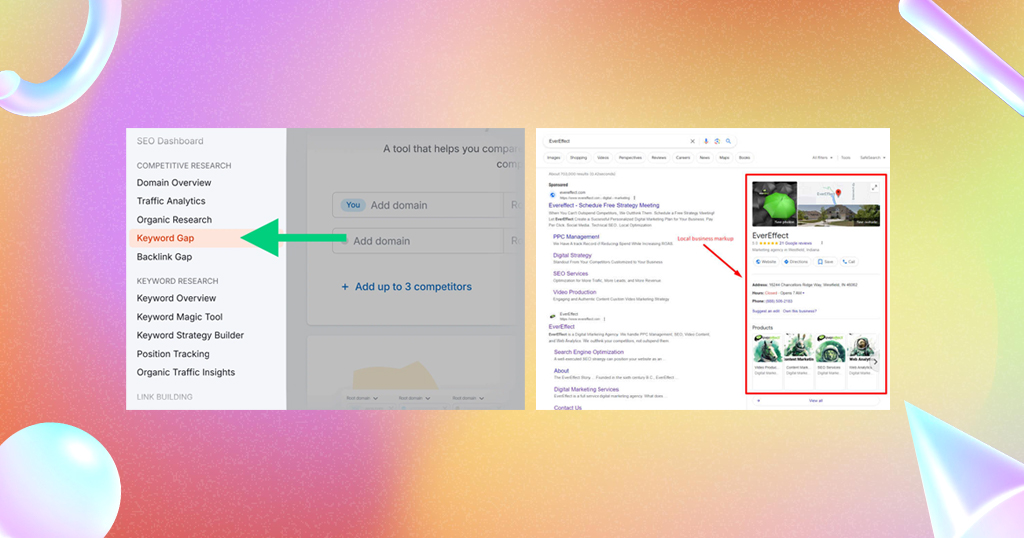
- Add local schema markup (structured data) to your website so search engines can clearly identify your business type, address, and hours. Google’s Structured Data guide explains how to implement LocalBusiness schema without needing to be a developer.
Step 5: Build Local Backlinks
A backlink is when another website links to yours — and local backlinks (from other businesses or publications in your area) are a strong trust signal for local search. You don’t need hundreds of them; a handful of quality, locally relevant links can move the needle significantly.
Practical ways to earn local backlinks without cold outreach:
- Local news and blogs: If your business does something newsworthy (a new opening, a community event, a charity tie-up), local news websites and neighbourhood blogs often cover it and link back.
- Chamber of commerce directories: Most cities have a local business association or chamber of commerce with a member directory. Getting listed there is both a citation and a backlink.
- Supplier and partner websites: If you stock a particular brand or work with local suppliers, ask if they list their stockists or partners online — and if you can be added.
- Sponsorships: Sponsoring a local event, sports team, or community initiative often comes with a mention and link on the event website.
For a broader understanding of how backlinks affect local search rankings, Moz’s Local SEO Guide is one of the most comprehensive free resources available.
Step 6: Use Social Media to Reinforce Local Presence
Social media isn’t a direct local SEO ranking factor the way reviews or citations are — but it amplifies everything else. A consistent social presence drives traffic, builds brand recognition in your area, and creates more touchpoints for potential customers who find your Google listing but want to know more before visiting.
For local businesses, the most effective social content tends to be:
- Behind-the-scenes content: Your team, your process, your products being made. This builds familiarity and trust with a local audience.
- Location-tagged posts: Always tag your city, area, or neighbourhood in posts and stories. This makes your content discoverable to nearby users browsing by location.
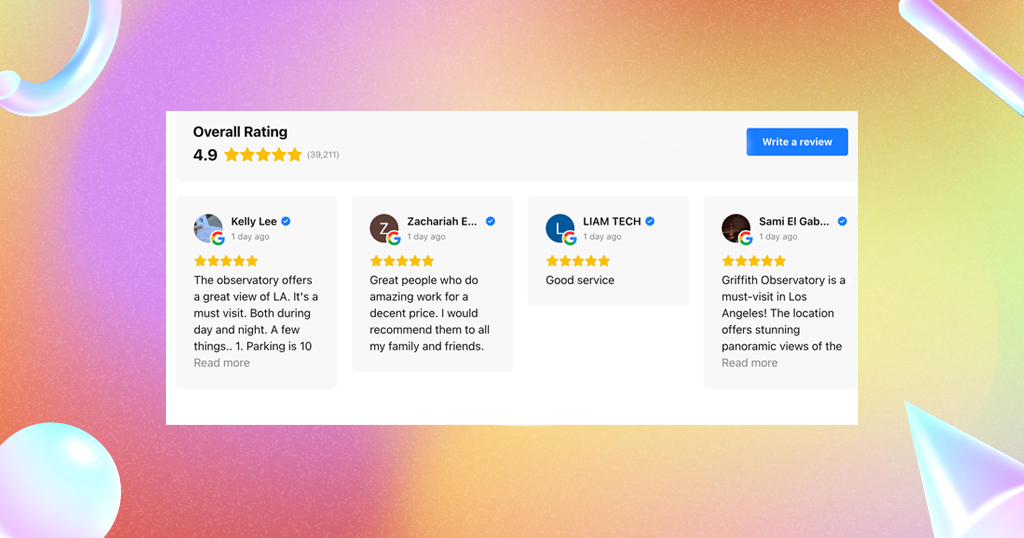
- Customer stories and reviews: Resharing a great review (with permission) on Instagram or Facebook is one of the highest-trust pieces of content you can post.
- Local event tie-ins: Posting around local festivals, events, or community moments shows you’re embedded in the area, not just operating in it.
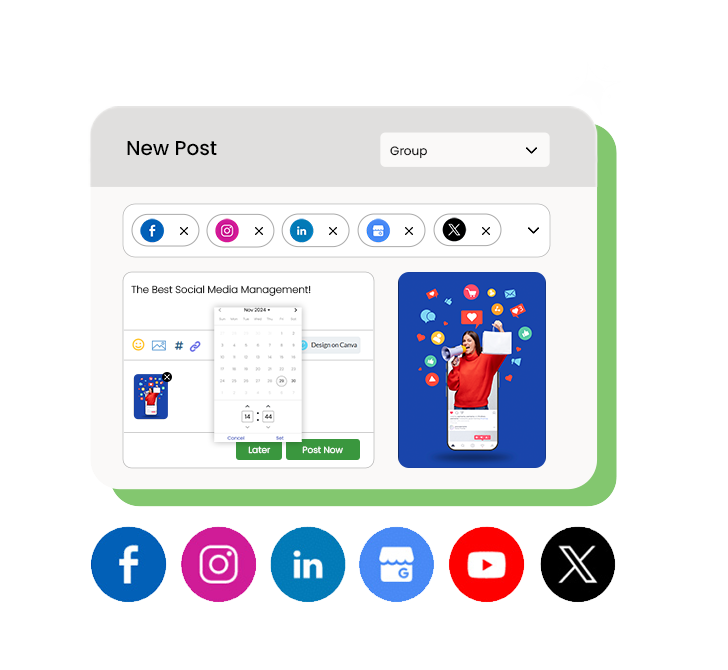
If creating and scheduling content across multiple platforms feels like a full-time job alongside running your business, Storefries’ social media management tools let you plan, schedule, and publish posts across platforms from one dashboard — so consistency doesn’t require constant attention.
Step 7: Track What’s Working
Local SEO isn’t a one-time fix — it’s an ongoing process. The only way to know if your efforts are moving the needle is to track the right metrics.
Key things to monitor:
- Google Business Profile Insights: How many people viewed your profile, clicked for directions, called you, or visited your website — all broken down by time period. This is free data inside your Business Profile dashboard.
- Local keyword rankings: Are you appearing in the Map Pack for your main search terms? Tools like Google Search Console show which search queries are bringing people to your site, and Semrush’s local rank tracking lets you monitor specific local keywords over time.
- Review trends: Are you getting more reviews month over month? Is your average rating going up or down? Tracking this across all your locations is far easier with a centralized reputation management dashboard than checking each profile individually.
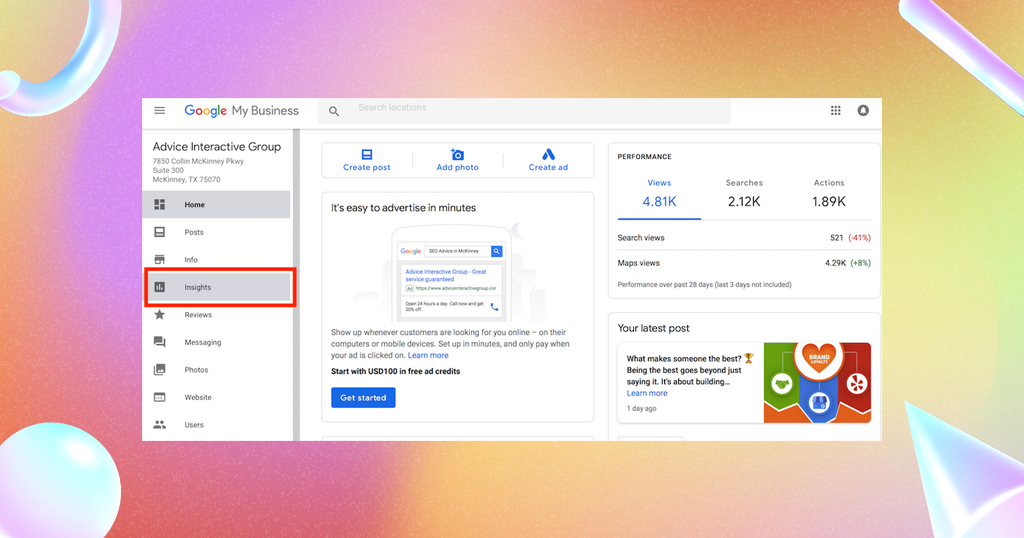
Set a recurring 30-minute monthly review to check these numbers. Small, consistent improvements in each area compound into significant ranking gains over 6–12 months.
The Bottom Line
Local SEO for small businesses doesn’t require a specialist agency or a big ad budget. It requires consistency across a handful of high-impact areas: a complete and active Google Business Profile, a steady stream of genuine reviews, accurate listings across directories, and a website that speaks to your local market.
The businesses ranking at the top of Google Maps in your area aren’t there by accident — they’ve simply done the basics better and more consistently than their competitors. Start with the steps above, track your progress monthly, and the results follow.
Storefries is built to handle the ongoing work that local SEO requires at scale — review monitoring, listing management, social media scheduling, and profile updates across all your locations from one dashboard. Browse our pricing plans to find the right fit, or read more local marketing guides on the Storefries blog.
Quick FAQ: Local SEO for Small Business
1. How long does local SEO take to show results?
Most businesses start seeing movement in local rankings within 3–6 months of consistent effort. Quick wins (like completing your GBP profile and getting a few more reviews) can show up faster, sometimes within weeks.
2. Is local SEO free?
The core tactics optimising your Google Business Profile, collecting reviews, building directory citations, and on-site optimisation are all free. Tools that automate and scale these efforts have a cost, but the fundamentals don’t require paid software.
3. Do I need a website to rank locally?
Not strictly; businesses rank in the Map Pack with just a Google Business Profile. But having a website significantly improves your chances, especially for competitive categories, because it gives Google more signals to confirm your relevance and location.
4. What’s the difference between local SEO and regular SEO?
Regular SEO targets broad, often national or global search traffic. Local SEO specifically targets searches that include a location (“near me,” city name, neighbourhood) or searches Google interprets as local in intent. The tactics overlap, but local SEO puts much more weight on your Google Business Profile, reviews, and NAP consistency.



Leave A Comment