Advertising Platforms: 17 Best Options for 2026 (Compared)
Compare 17 advertising platforms for 2026: Google, Meta, TikTok, Amazon, and more. Learn how to choose by goal, budget, and audience, plus a 90-day plan.
Kasthuri| 17 Nov 2026

Quick answer: An advertising platform is software that lets you buy, target, deliver, and measure ads. The best advertising platforms for most businesses in 2026 are Google Ads (for people already searching), Meta Ads (Facebook, Instagram, Threads and WhatsApp, for discovery), YouTube and TikTok (video), Amazon Ads (for sellers), LinkedIn Ads (B2B) and Microsoft Advertising (extra search reach). Pick one platform that matches your goal, test it with a budget based on your break-even cost per sale, and add a second platform only after the first one is profitable.
Key takeaways
- There is no single best advertising platform. The right one depends on your goal, audience, budget, and the creative you can produce.
- Three companies, Alphabet, Meta, and Amazon, take about 57.6% of global advertising revenue outside China, according to WPP Media’s 2026 forecast.
- Ads are moving into new places in 2026: Google’s AI Overviews and AI Mode, WhatsApp Status and Promoted Channels, and Threads.
- Start with break-even math: break-even ROAS is 1 divided by your gross margin.
- Test one platform at a time for at least four weeks, and measure sales or leads, not just clicks.
Choosing where to advertise is the most expensive decision in small business marketing, because a wrong choice wastes budget before you learn anything. Most “best advertising platforms” lists simply rank famous names. This guide helps you decide: it explains the types of platforms, compares 17 of them, gives you a budget formula and a 90-day testing plan, and covers the 2026 changes that affect where your ads appear.
Organic work still matters. Ads send people to a profile, a website, or a listing, so make sure those are ready first. Our guides on choosing social media platforms for your business, content marketing for small business, and getting more customers for a small business cover the foundations.
What Are Advertising Platforms?
An advertising platform is a system that lets advertisers create ads, choose who sees them, pay for delivery, and track results. Most are self-serve dashboards, such as Google Ads and Meta Ads Manager. You set a goal, an audience, a budget, and a creative, and the platform runs an auction to decide which ads appear.
Every advertising platform has four parts:
- Inventory: the places ads can appear, such as search results, feeds, videos, or marketplaces.
- Targeting: how you choose the audience, for example by keywords, interests, location, job title, or your own customer list.
- Buying model: how you pay, such as cost per click (CPC), cost per thousand impressions (CPM), cost per view, or cost per lead.
- Measurement: the reports and tracking that show what your money produced.

Ad platform vs ad network vs DSP
These terms are often mixed up:
| Term | What it means | Examples |
|---|---|---|
| Advertising platform | A system for buying and managing ads, often on the platform owner’s own inventory | Google Ads, Meta Ads, LinkedIn Ads |
| Ad network | Connects advertisers with many publisher websites and apps | Taboola, Outbrain, Google Display inventory |
| Demand-side platform (DSP) | Software that buys ad space programmatically across many exchanges | The Trade Desk, Google Display & Video 360, Amazon DSP |
| Retail media network | Ads sold on a retailer’s own site or app | Amazon Ads, Walmart Connect, Flipkart Ads |
Small businesses usually start with platforms that have their own audience (Google, Meta). Networks and DSPs suit larger budgets and more specialist teams.
The 2026 Advertising Market at a Glance
Advertising is growing, and a few giants take most of the money. WPP Media’s mid-2026 forecast puts global advertising revenue at about $1.3 trillion in 2026, up 8.9% excluding US political spending, an upgrade from the 7.1% it forecast six months earlier (Exchange4media).
| 2026 forecast | Figure |
|---|---|
| Global advertising revenue | about $1.3 trillion (+8.9%) |
| Share taken by Alphabet, Meta and Amazon outside China | about 57.6% |
| Search, including generative search, as a share of all ad revenue | about 21.8% |
| Social and other digital | about $161.4 billion (+16.3%) |
| Traditional and generative search combined | about $139.7 billion (+12.6%) |
| Commerce (retail media) | about $72.2 billion (+17.7%) |
| Generative search ads | about $5.1 billion, forecast to pass $100 billion by 2030 |
Sources: WPP Media This Year Next Year 2026 midyear forecast, reported by Exchange4media and The Measure. These are forecasts, not final results.
What’s changing in 2026
- Ads inside AI answers. Google says existing Search, Shopping, and Performance Max campaigns are automatically eligible to show text and Shopping ads within AI Overviews and AI Mode. You can’t target or opt out of these placements separately, and availability is expanding by country and language (Google Ads Help).
- Ads in WhatsApp. Meta rolled out Status ads and Promoted Channels globally in 2026. They appear only in the Updates tab, never inside private chats, and are bought through Ads Manager (Storyboard18). For organic WhatsApp tactics, see our WhatsApp marketing guide.
- Threads ads. Meta reportedly opened Threads ads to all users worldwide in January 2026.
- More automation. Google has moved AI Max for Search out of beta and is merging more of its campaign types, as industry reports describe, so expect fewer manual controls and more reliance on your conversion data.
- Retail media growth. Commerce advertising is among the fastest-growing segments, led by Amazon and Walmart.

Types of Advertising Platforms
Eight types cover almost every option. Knowing the type tells you what job a platform does.
| Type | What it’s good at | Examples |
|---|---|---|
| Search advertising | Capturing people who are already looking for what you sell | Google Ads, Microsoft Advertising |
| Social advertising | Discovery, awareness and retargeting | Meta, TikTok, LinkedIn, Pinterest, Snapchat, Reddit, X |
| Video and streaming | Storytelling and reach | YouTube, connected TV, Spotify |
| Marketplace and retail media | Reaching shoppers at the point of purchase | Amazon Ads, Walmart Connect, Flipkart Ads |
| Local advertising | Calls, visits and bookings from nearby customers | Google Local Services Ads (where available), Nextdoor, local directories |
| Native advertising | Promoting articles and content on publisher sites | Taboola, Outbrain |
| Programmatic | Large-scale display, video and CTV buying | The Trade Desk, Google DV360, Amazon DSP |
| Messaging | Click-to-chat and conversational leads | WhatsApp Status ads, click-to-WhatsApp and click-to-Messenger ads |
17 Best Advertising Platforms Compared
Use this table to shortlist two or three platforms, then read the notes below. Costs vary widely by country, industry, and season, so test before you commit.
| # | Platform | Best for | Common formats | Pricing model | Watch out for |
|---|---|---|---|---|---|
| 1 | Google Ads | High-intent leads and sales | Search, Shopping, Performance Max, Demand Gen, YouTube | CPC, CPM, CPA goals | Competitive keywords, more automation |
| 2 | Meta Ads | Discovery, e-commerce, local reach | Feed, Reels, Stories, Threads, WhatsApp Status | CPM, CPC | Creative fatigue, tracking setup |
| 3 | YouTube Ads | Video storytelling and reach | In-stream, Shorts, in-feed video | CPV, CPM, CPC | Needs video creative |
| 4 | Microsoft Advertising | Extra search reach, B2B, finance | Search, Shopping, audience ads | CPC | Smaller volume than Google |
| 5 | Amazon Ads | Sellers on Amazon | Sponsored Products, Brands, DSP | CPC, CPM | Requires an Amazon presence |
| 6 | TikTok Ads | Short video, younger audiences | In-feed, Spark Ads | CPM, CPC | Needs native-style creative |
| 7 | LinkedIn Ads | B2B targeting by job title and company | Sponsored content, lead gen forms | CPC, CPM | Higher cost per lead |
| 8 | Pinterest Ads | Visual products and planning intent | Standard, video, Shopping | CPC, CPM | Smaller reach in some markets |
| 9 | Snapchat Ads | Younger audiences, AR | Snap Ads, lenses | CPM, CPC | Narrower demographic |
| 10 | Reddit Ads | Community and niche interests | Promoted posts, conversation ads | CPC, CPM | Authentic tone required |
| 11 | X Ads | Real-time conversation and events | Promoted posts, video | CPC, CPM | Smaller performance reach for many brands |
| 12 | Apple Ads | App installs on the App Store | Search results ads | CPT, CPI | Only for apps |
| 13 | Spotify Ads | Audio and podcast reach | Audio, video, podcast | CPM | Hard to attribute |
| 14 | Local ads (Google Local Services Ads, Nextdoor) | Local service leads | Pay-per-lead, neighborhood ads | Per lead, CPM | Country and category limits |
| 15 | Retail media (Walmart Connect, Flipkart Ads) | Brands selling on retailer sites | Sponsored listings, display | CPC | Tied to the retailer |
| 16 | Native networks (Taboola, Outbrain) | Content promotion and traffic | Recommendation widgets | CPC | Lead quality varies |
| 17 | Programmatic DSPs (The Trade Desk, DV360) | Large-scale awareness and CTV | Display, video, CTV, audio | CPM | Needs bigger budgets and expertise |
Notes on the platforms most small businesses start with
Google Ads: when people are already searching. Choose it when customers search for what you sell, such as “emergency plumber” or “wedding photographer”. Search ads capture existing demand, which usually means higher intent than social ads. Start with Search, add Shopping if you sell products, and let Performance Max or AI Max expand reach only after your conversion tracking is reliable. Ads can also appear in AI Overviews and AI Mode through eligible campaigns.
Meta Ads: when you need discovery and local reach. Facebook and Instagram let you target by location, interests, and your own audiences. They work well for restaurants, retail, salons, and e-commerce, especially with Reels and Stories creative and a 3 to 5 km radius for local businesses. Our guides on Facebook marketing for small business and selling on Instagram show how to prepare your profile and content.
YouTube and TikTok: when video is your strength. Both reward authentic, short, vertical video. If you can make three or four simple videos a month, test them; if not, start with search or static social ads.
Amazon Ads (and other marketplace ads): when you sell there. Sponsored ads sit where shoppers are already comparing products. They only make sense if you have listings, stock, and reviews.
LinkedIn Ads: when you sell to businesses. Job title, industry, and company-size targeting make it useful for B2B, though costs per lead are usually higher than on other social platforms. Pair it with strong organic content. See our guide on what impressions mean on LinkedIn.
Microsoft Advertising: when you want incremental search. It reaches Bing, Yahoo and partner searchers who may not use Google. You can often import Google Ads campaigns, so it’s a low-effort second test once Google Search works.
Local ads: when customers are nearby. Google Local Services Ads are sold only in a limited list of countries and don’t include India. Check our guide to Google Local Services Ads before you plan around them, and make sure your Google Business Profile is complete either way.
How to Choose the Right Platform (5 Steps)
Follow these five steps in order. Each one narrows your shortlist.
1. Define one goal. Pick the main result you want: calls and bookings, online sales, leads, app installs, or awareness. A platform that is great for awareness (TikTok, YouTube) may be poor for immediate leads.
2. Match the platform to your buyer’s behavior. If buyers search with a clear need, start with Google or Microsoft. If they don’t know you exist yet, start with Meta, TikTok, or YouTube. If they are professionals, consider LinkedIn.
3. Work out your break-even numbers. Use the formulas in the budget section. If your allowed cost per sale is lower than the typical cost on a platform, don’t start there.
4. Check your creative capacity. Video platforms need regular video. Search ads need strong landing pages. Marketplace ads need good product listings and reviews.
5. Confirm you can measure it. You need conversion tracking, a phone number or WhatsApp link you can attribute, and a way to match sales to campaigns. If you can’t measure it, fix tracking first.
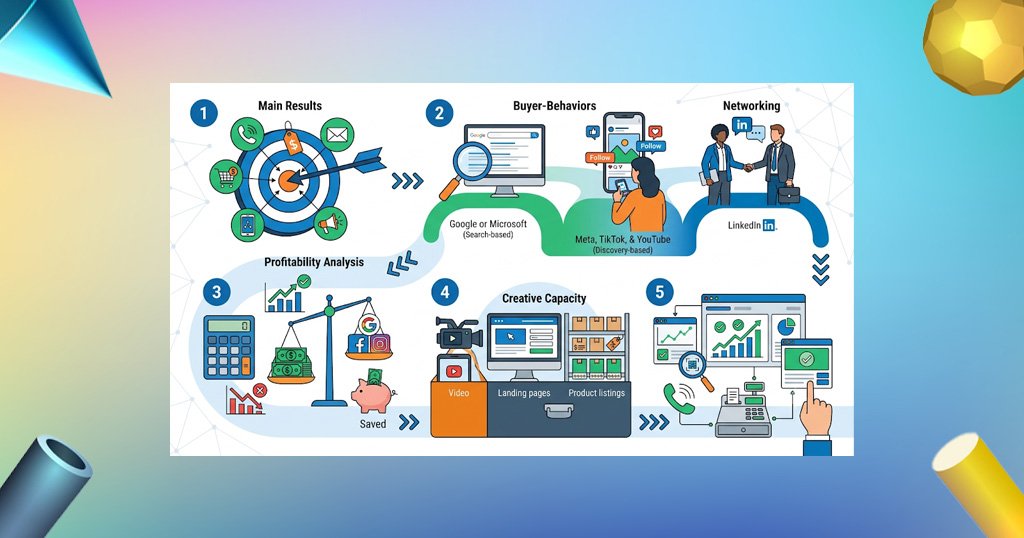
Then pick one primary platform and one test platform at most. Spreading a small budget across five platforms starves all of them of data.
Best Platforms by Business Type
| Business type | Start with | Add next | Notes |
|---|---|---|---|
| Local service business (clinic, salon, repair, trades) | Google Ads Search and your Google Business Profile | Meta local ads, click-to-WhatsApp | Add Local Services Ads where available |
| Restaurant or cafe | Meta local-radius ads and your Google Business Profile | Google Search for “near me” demand | See our restaurant marketing ideas |
| E-commerce brand | Meta and Google Shopping | TikTok, Pinterest, marketplace ads | Use catalog feeds and retargeting |
| B2B services or SaaS | Google Search and LinkedIn | Microsoft Advertising, retargeting | Focus on lead quality, not volume |
| Mobile app | Google App campaigns and Meta | TikTok, Apple Ads | Track installs and in-app actions |
| Brand awareness | YouTube, Meta and TikTok | Connected TV, programmatic | Measure reach and brand search lift |
| Marketplace seller | Amazon Ads or the marketplace’s own ads | Google Shopping, Meta retargeting | Protect your margin after ad costs |
How Much Should You Spend?
Spend what lets you collect enough conversions to learn, but no more than your break-even math allows. Use these formulas.
- Break-even ROAS = 1 ÷ gross margin If your gross margin is 40%, break-even ROAS is 1 ÷ 0.40 = 2.5. You need ₹2.50 (or $2.50) of revenue for every ₹1 (or $1) of ad spend just to cover costs.
- Maximum cost per acquisition (CPA) on the first sale = average order value × gross margin
- US example: $60 order × 40% margin = $24 maximum CPA.
- India example: ₹1,500 order × 40% margin = ₹600 maximum CPA.
- Minimum test budget = target CPA × conversions you need to learn from. Aim for about 30 conversions per test as a practical minimum for a readable result (more is better).
- US example: $24 × 30 = $720
- India example: ₹600 × 30 = ₹18,000
If you can’t afford a test budget on a platform, choose a cheaper channel or a narrower audience first.
A simple budget split
When you have more than one platform running, a common rule of thumb is:
- About 70% on the platform that is already profitable
- About 20% on a second platform you are testing
- About 10% on experiments such as a new format or audience
This is a heuristic, not a law. Adjust it to your results. Cut anything that stays above your maximum CPA after a fair test.
How to Measure Results
Measure the outcome you care about, not the cheapest click. Set up tracking before you spend.
- Install conversion tracking on every platform: the Google tag, Meta pixel, and server-side events where possible.
- Use UTM parameters on all ad links so your analytics shows which ad drove each visit.
- Track offline conversions. Use a unique phone number, a WhatsApp link per campaign, a coupon code, or a “how did you find us?” question.
- Review weekly, decide monthly. Short-term swings are noise.

| Goal | Primary metric | Supporting metrics |
|---|---|---|
| Sales | Cost per purchase, ROAS | Conversion rate, average order value |
| Leads | Cost per qualified lead | Lead-to-customer rate, response time |
| Calls and visit | Cost per call or visit | Direction requests, call duration |
| App installs | Cost per install and per active user | Retention, in-app purchases |
| Awareness | Reach and cost per 1,000 people | Brand search growth, direct traffic |
For deeper guidance, see our guide to social media metrics to track and our social media lead generation tips.
Run a simple incrementality test
Platforms often claim credit for sales that would have happened anyway. To check, pause ads in one city or region for two to four weeks and compare sales with a similar region where ads stayed on. If sales barely change, the ads weren’t driving much.
Rules and Compliance (India and the US)
Every platform has policies, and each country has advertising rules. The basics:
- Be truthful. Claims, prices, and offers must be accurate, and terms must be clear.
- Disclose paid partnerships. In India, the Advertising Standards Council of India (ASCI) publishes influencer advertising do’s and don’ts. In the US, endorsements need clear disclosure too.
- Follow each platform’s ad policies. Restricted categories (health, finance, housing, alcohol, and others) have extra rules and can be rejected.
- Respect privacy. Use customer lists only with proper consent, and follow local privacy law, such as India’s Digital Personal Data Protection Act, 2023.
- Don’t buy or fake reviews. Reviews power ad trust, but incentives for reviews are prohibited on Google. Learn how to ask for reviews the right way.
Your 90-Day Testing Plan
Run the plan in order and keep notes. Each phase has a decision at the end.
- Week 0: Prepare. Set your goal, break-even numbers, landing page, tracking, and reviews. Make sure your Google Business Profile and social profiles are complete.
- Weeks 1 to 2: Launch one platform. Use two or three ad variations and one clear offer. Don’t change anything in the first week except to fix errors.
- Weeks 3 to 4: Evaluate. Compare cost per result with your maximum CPA. Pause the weakest ads and keep the strongest. Decide whether to continue, adjust, or stop.
- Weeks 5 to 8: Improve the winner. Test one variable at a time, such as the headline, image, audience, or landing page. Our guide to social media content experimentation explains how.
- Weeks 9 to 10: Add a second platform. Start a small test on the next best platform from your shortlist, using the proven offer.
- Weeks 11 to 12: Decide and scale. Move budget toward what beats your break-even numbers, cut what doesn’t, and document what you learned.
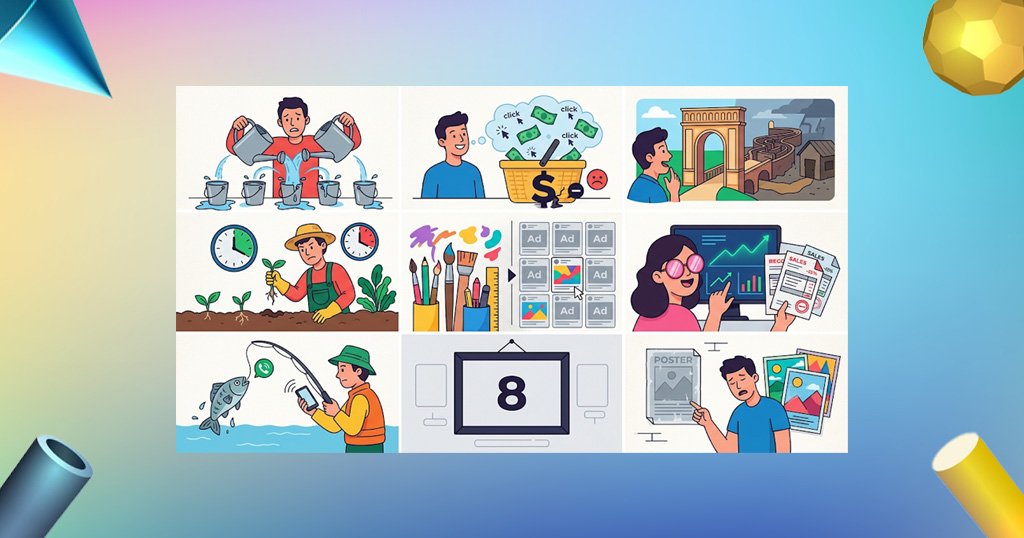
Common Mistakes
- Starting on five platforms at once. Split budgets teach you nothing.
- Skipping break-even math. You can get plenty of clicks and still lose money.
- Sending traffic to a weak page. The ad is only half the funnel.
- Judging results too early. Give each test enough time and conversions.
- Ignoring creative. Ad creative is often the biggest performance lever on social platforms.
- Trusting platform reports blindly. Cross-check with your own sales and analytics.
- Forgetting follow-up. Slow replies waste paid leads. Answer fast on calls, messages, and WhatsApp.
- Never refreshing ads. Audiences tire of the same creative, so rotate it.
The Bottom Line
The best advertising platform is the one that reaches your customers at a cost you can afford and can measure. Start with your break-even numbers, pick one platform that fits your goal, test for four weeks, and add a second only when the first is profitable. Keep organic content, reviews, and your profiles strong so every ad lands on something trustworthy.
Storefries helps with the organic side that makes ads work harder: social media scheduling, review monitoring and requests, and local rank tracking from one dashboard. Browse more guides on the Storefries blog.
Boost Your Social Media with Automation. Start Your Free Trial Today! Streamline your social media game with Storefries to create, publish, analyze, engage, and collaborate, all in one place. Get started for free
FAQ
1. What are advertising platforms?
Advertising platforms are software systems that let you create ads, choose your audience, set a budget, and track results. Examples include Google Ads, Meta Ads, TikTok Ads, LinkedIn Ads, and Amazon Ads. Most run an auction to decide which ads appear.
2. What are the best advertising platforms in 2026?
The most widely used are Google Ads for search demand, Meta Ads for social discovery, YouTube and TikTok for video, Amazon Ads for marketplace sellers, LinkedIn Ads for B2B, and Microsoft Advertising for extra search reach. The best one depends on your goal, audience, and budget.
3. What is the best advertising platform for a small business?
Most small businesses should start with Google Ads if customers search for their service, or Meta Ads if they need to be discovered. Test one platform first, measure your cost per result, and add a second only after the first is profitable.
4. Which advertising platform is the cheapest?
There’s no universally cheapest platform, because costs depend on country, industry, season, and competition. Test a small budget and compare cost per result with your break-even cost per acquisition, not the cost per click alone.
5. What is the difference between an ad platform, an ad network and a DSP?
An advertising platform lets you buy ads, often on its own inventory, like Google Ads or Meta Ads. An ad network connects advertisers with many publisher sites. A demand-side platform (DSP) buys ad space programmatically across many exchanges and suits larger budgets.
6. How much should I spend on advertising?
Work backward from your numbers: maximum cost per acquisition equals average order value times gross margin, and a minimum test budget equals that CPA times about 30 conversions. Spend only what your break-even math allows, and scale what beats it.
7. Are there ads in WhatsApp?
Yes Meta rolled out Status ads and Promoted Channels globally in 2026. They appear only in the Updates tab, never in private chats, and are bought through Meta Ads Manager.
8. Can my ads appear in Google AI Overviews and AI Mode?
Google says existing Search, Shopping, and Performance Max campaigns are automatically eligible for text and Shopping ads in AI Overviews and AI Mode, with availability expanding by country and language. You can’t target or opt out of these placements separately.
9. What is the best advertising platform for B2B?
LinkedIn Ads is the most precise for B2B because you can target by job title, industry, and company size, but it usually costs more per lead. Google Search and Microsoft Advertising capture buyers who are actively searching, and often pair well with LinkedIn.
10. How long should I test an advertising platform?
Test for at least four weeks and until you have enough conversions to read the results, about 30 as a practical minimum. Avoid changing many things at once so you can see what caused any improvement.

Leave A Comment