
How to Get More Google Reviews: Retail Owner Guide
Learn how restaurant and retail owners can turn online reviews into more walk-in customers, backed by 2026 consumer review data. (147 chars)
Kasthuri| 22 June 2026
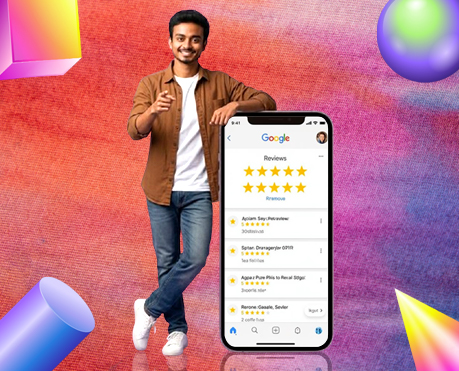
If you run a restaurant or retail store, you already know the drill: someone searches “best [your category] near me,” scrolls through a handful of options, skims the Google reviews, and picks the one that feels trustworthy. That decision happens in seconds — often before they’ve seen your menu, your storefront, or a single product photo.
Here’s what most owners miss: Google reviews aren’t just feedback. They’re free advertising that runs 24/7, directly influencing whether someone walks through your door or keeps scrolling. If you’re wondering how to get more Google reviews without spending on ads, the answer comes down to a few practical, no-budget-required habits — and the data behind why they matter more in 2026 than ever before.
Why Getting More Google Reviews Matters More Than Ever
Local review behavior has shifted fast. According to BrightLocal’s 2026 Local Consumer Review Survey, nearly all consumers now read reviews before choosing a local business, and the share who say they “always” check reviews has jumped sharply year over year. Star rating expectations have also climbed — a growing portion of shoppers say they’ll only consider businesses rated 4.5 stars or higher, up significantly from just a year prior.
For restaurant and retail owners, this means two things:
- A handful of old, unanswered reviews can quietly cost you customers who never even visit your page.
- A small, consistent review strategy can outperform a much bigger ad budget, because reviews influence buying decisions at the exact moment someone is deciding where to go.
That’s the opportunity. Here’s how to capture it.
1. Make It Easy to Ask — This Is How You Get More Google Reviews
The biggest reason happy customers never leave a review isn’t reluctance — it’s that nobody asked. Build the ask into a moment that already exists: a receipt footer, a thank-you text after pickup, a QR code by the register, or a follow-up email after an online order.
The goal is friction-free: a customer should be able to leave a review in under 30 seconds from a single tap or scan. Timing matters too — catch people right after a good experience (the meal was great, the item fit perfectly, the staff was helpful), not three days later when the memory has faded, and the motivation has gone with it.
Treat this as a repeatable system, not a one-off campaign. A steady trickle of recent reviews tends to matter more to both customers and search algorithms than a big batch collected once and never refreshed.

2. Respond to Every Review — Yes, Even the Bad Ones
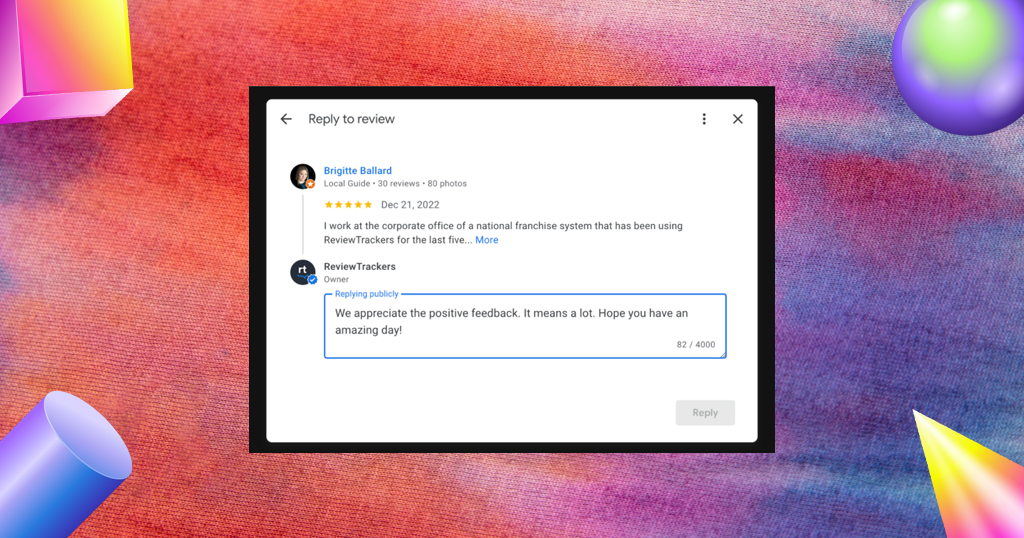
A five-star review with no reply is a missed opportunity. A two-star review with no reply is a red flag for every future customer who reads it. Responding shows you’re paying attention, and for many shoppers, it’s the deciding factor when they’re on the fence.
For negative reviews: keep it short, calm, and specific. Acknowledge the issue, avoid getting defensive, and invite the conversation offline (“please reach out to us at [contact]”) rather than litigating details in public. For positive reviews: a genuine thank-you that references a real detail from their visit reads as authentic, not copy-pasted.
Google’s own guidance on managing Business Profile reviews recommends responding promptly and professionally to all reviews — both as a trust signal to customers and as a sign of an actively managed business. Aim to reply within a day or two; response speed itself shapes perception, even before someone reads what you actually said.
3. Keep Your Business Listings Accurate Across Every Platform
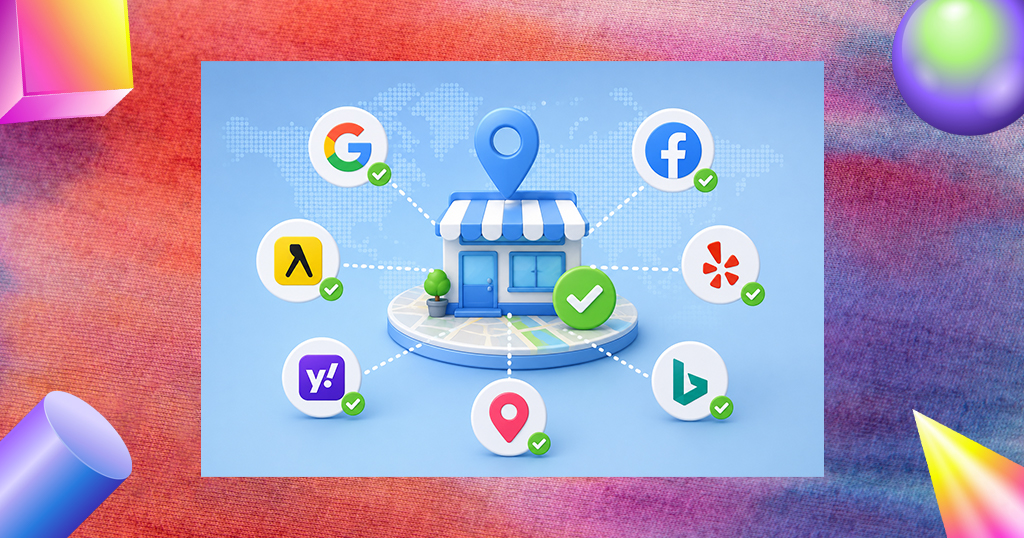
Reviews don’t do much good if people can’t find you, or find the wrong hours, address, or phone number. Inconsistent listings across Google, Yelp, Facebook, and other directories quietly cost you customers who give up and go elsewhere. This is especially painful for multi-location restaurant and retail brands, where one outdated listing can undercut an otherwise strong local reputation.
Run a quick audit: search your business name and confirm hours, address, and contact details match everywhere they appear. Fix mismatches the moment you spot them, and double-check after any change in hours, location, or ownership.
If you’re managing more than a couple of locations, doing this manually gets unsustainable fast — which is exactly why tools that sync your Google Business Profile listings automatically can save hours every month while keeping every location consistent.
4. Turn Great Reviews Into Marketing Content
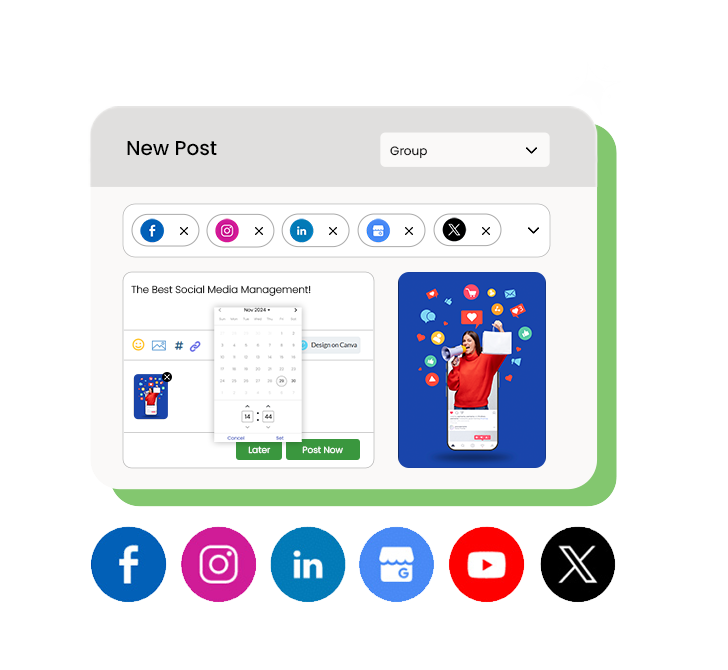
A great review sitting on a third-party site is doing a fraction of the work it could be doing. Screenshot it (or pull the public text) and share it on social media, your website, or even printed near your register. Seeing real customer praise in multiple places reinforces trust and nudges undecided buyers toward visiting.
This is also a low-effort way to keep your social media content calendar full. Customer reviews are some of the most authentic, highest-converting content you can post — far more persuasive than another product photo or promotional graphic, because it’s someone else doing the selling for you.
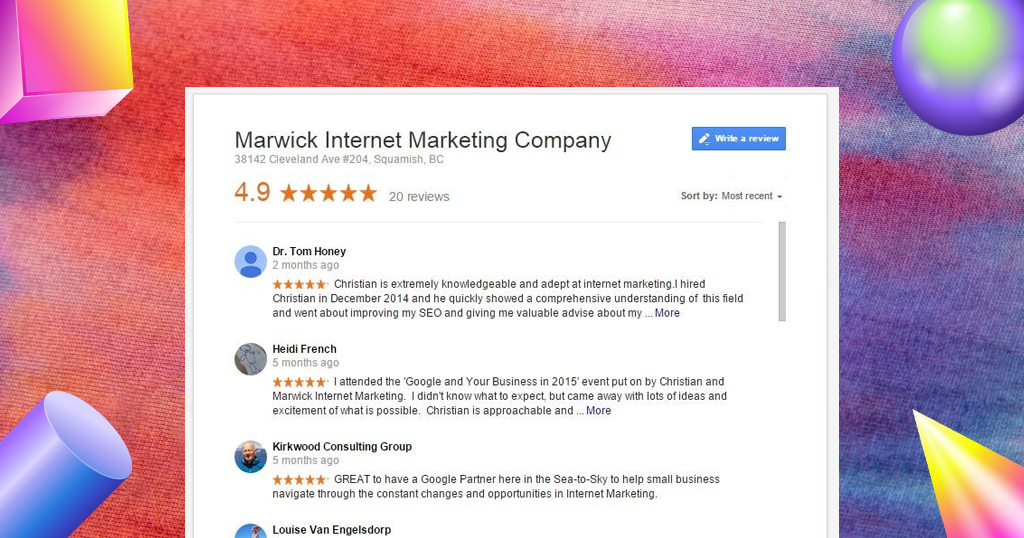
5. Track Review Trends to Catch Real Problems Early
One bad review is an outlier. Three reviews mentioning the same thing — slow service, a confusing checkout, a specific menu item — is a pattern worth fixing. Reviews are essentially free customer research, pointing you toward exactly where to focus your next operational improvement.
Set aside 15 minutes a week to skim recent reviews across all your locations and note recurring themes. Small fixes based on real feedback tend to show up in your ratings within a few months. For multi-location brands, a centralised reputation management dashboard makes this kind of pattern-spotting realistic — instead of checking five different apps for five different stores.
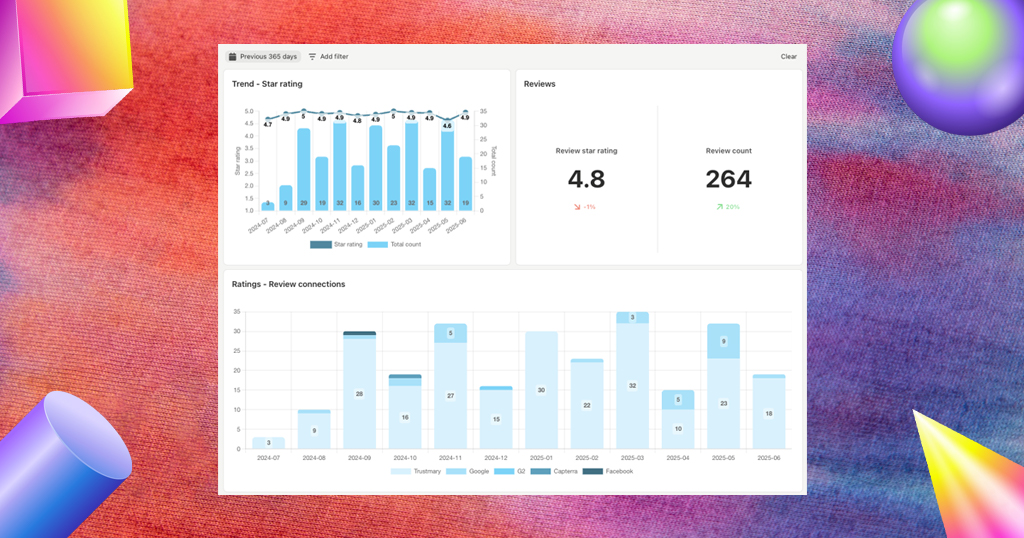
Common Review Mistakes That Quietly Cost You, Customers
Even owners who actively collect reviews often undercut their own efforts in a few avoidable ways:
- Only letting unhappy customers find their way to you. If you wait for customers to leave reviews on their own, you’ll mostly hear from the extremes — thrilled or furious. Proactively asking everyone evens out your rating with a more accurate, representative picture.
- Buying or incentivising reviews. Offering discounts in exchange for positive reviews violates most platform policies, including Google’s, and can get listings suspended. It also tends to produce reviews that read as inauthentic, which savvy customers can spot.
- Letting negative reviews sit unanswered for weeks. Silence reads as indifference. Even a brief, professional response weeks later is better than none — but a fast response is far more effective at limiting the damage.
- Treating reviews as a one-time project. A review push before a big opening or holiday season is useful, but it fades fast. Ongoing collection, response, and monitoring are what actually move your rating and rankings over time.
- Ignoring reviews on platforms beyond Google. Yelp, Facebook, TripAdvisor, and industry-specific sites still drive real traffic for restaurants and retail stores, especially among younger shoppers who cross-check multiple platforms before deciding.
Avoiding these pitfalls costs nothing extra — it just means treating review management as an ongoing habit rather than an afterthought.
How Many Reviews Do You Actually Need to Compete?
There’s a sweet spot. Too few reviews and customers assume you’re new or untested; an overwhelming wall of thousands can feel impersonal. For most restaurants and retail stores, somewhere between 20 and 200 recent, genuine reviews builds enough trust to compete locally — restaurants tend to need more volume simply because dining out happens more frequently than, say, buying furniture.
Recency matters as much as volume. A 4.8-star rating built entirely on reviews from three years ago can lose to a competitor with a slightly lower rating and reviews from last week — because recent activity signals the business is still delivering, today, not just historically.
The Bottom Line
Learning how to get more Google reviews isn’t about a single trick — it’s consistency. The businesses that win locally aren’t necessarily the ones with the most reviews; they’re the ones actively managing the conversation already happening about them online.
If you’re juggling this across multiple locations, doing it manually in spare moments gets unsustainable fast. That’s exactly the kind of workflow Storefries is built to simplify — monitoring reviews, keeping listings consistent, and turning customer feedback into action, all from one dashboard. Check out our pricing plans to see what fits your business, or browse more tips on the Storefries blog.
Quick FAQ:
1. What’s the fastest way to get more Google reviews?
Ask at the right moment — right after a positive interaction — and make it a one-tap process via a QR code, receipt link, or follow-up text. Consistency matters more than any single tactic.
2. Do online reviews actually affect local search rankings?
Yes. Review quantity, rating, and recency are all factors search engines use to rank local businesses, alongside how complete and consistent your business listings are.
3. How fast should I respond to a review?
Within a day or two when possible. Quick responses signal an actively managed business and shape how the response itself is perceived, even before someone reads the content.
4. What’s a good star rating to aim for?
Aim for 4.5 stars or higher where possible — a growing share of consumers now filter out anything below that threshold before considering a business at all.
5. Should I respond differently to reviews on Google vs. Yelp vs. Facebook?
The core approach stays the same — be prompt, specific, and professional — but tone can flex slightly by platform. Facebook and Instagram audiences tend to expect a more conversational voice, while Google responses are often read by people still deciding whether to visit at all, so clarity matters more than personality there.





Leave A Comment