Local AI Visibility: Get Recommended by ChatGPT (2026)
Learn how ChatGPT, Google AI Mode, and AI Overviews choose local businesses, and follow a 10-step plan to get recommended. Includes a free DIY tracker.
Kasthuri| 21 Oct 2026

Quick answer: To get recommended by ChatGPT, Google AI Mode, and Google AI Overviews, strengthen the sources these tools read: a complete Google Business Profile, a clear website with location and service pages, consistent listings on directories such as Yelp and Facebook, and steady reviews. Google says no special AI trick is required. Then check your visibility every month, because AI answers change from one search to the next.
Key takeaways
- AI tools are far more selective than the Google Map Pack. In one 2026 study of multi-location brands, ChatGPT recommended about 1.2% of locations, versus about 35.9% for Google’s local 3-Pack.
- Most of what AI cites comes from sources a business can manage: its own website, its listings, and its reviews.
- Wrong or inconsistent business details hurt. One study found ChatGPT’s business information was accurate only about 68% of the time.
- AI answers vary from one search to the next, so measure trends, not single answers.
- You can track your own AI visibility for free with a simple monthly prompt test (template included below).
Not long ago, a customer looking for a dentist or a restaurant typed a few words into Google and scanned a map. Today, a growing number simply ask an AI: “best family dentist near me open on Saturday.” Yext’s 2026 survey of 1,120 US adults found that 47% had used an AI tool to find a local business in the past month (Yext, Consumer Search Behaviors Report 2026).
That raises a fair question for any local business owner: when someone asks an AI, does it name you? This guide explains how these tools pick businesses, what the research says, and a 10-step plan to improve your chances. If you’re new to the basics, start with our Google Business Profile management guide and our multi-location local SEO playbook.
What Is Local AI Visibility?
Local AI visibility is how often, and how prominently, AI tools such as ChatGPT, Google AI Mode, and Google AI Overviews name your business when people ask for local recommendations. It is the AI-era counterpart of ranking in the Google Map Pack. Instead of a ranked list of ten results, the person usually receives a short answer naming a handful of businesses.
You may also see the idea called local AEO (answer engine optimization) or GEO (generative engine optimization). The label matters less than the goal: be one of the businesses the AI trusts enough to mention.
How Do AI Tools Choose Local Businesses?
AI tools build an answer by breaking your question into several smaller searches, gathering information from multiple sources, and blending what they find. Google calls this “query fan-out” and says AI Mode uses it to search subtopics at the same time across multiple data sources (Google Search Help). Your business has to show up across those smaller searches, not just one.
How selective is AI compared with Google’s local results?
SOCi’s 2026 Local Visibility Index analyzed more than 350,000 locations across 2,751 multi-location brands. It found that ChatGPT recommended about 1.2% of brand locations, compared with an average 35.9% appearance rate in Google’s local 3-Pack, which makes AI discovery roughly 30 times more selective (SOCI).
| Where | Share of brand locations recommended or shown |
|---|---|
| Google local 3-Pack | about 35.9% |
| Gemini | about 11.0% |
| Perplexity | about 7.4% |
| ChatGPT | about 1.2% |
Source: SOCi 2026 Local Visibility Index, multi-location brands. Independent businesses may see different numbers.
Two other findings from the same research are worth knowing. First, strong local search performance doesn’t guarantee an AI mention: in retail, only about 45% of the brands most visible in traditional local search were also among those AI recommended most. Second, reputation matters: locations recommended by ChatGPT averaged a 4.3-star rating (SOCi).
Where does the information come from?
Yext analyzed 6.8 million AI citations from about 1.6 million queries across ChatGPT, Gemini, and Perplexity (July to August 2025). It found that about 86% of citations came from sources brands can manage or influence (Yext):
| Source type | Share of AI citations |
|---|---|
| Business’s own website | about 44% |
| Listings (directories and business profiles) | about 42% |
| Reviews and social | about 8% |
| Forums such as Reddit | about 2% |
Source: Yext Research, 2025. The study covered retail, finance, healthcare, and food service, and Yext sells listing-management software, so treat it as one data point.
The takeaway is encouraging. Most of what AI reads about you is content you control. For a practical walkthrough of reading this kind of data, see Search Engine Land’s coverage of the Yext study.
What do customers do after an AI recommendation?
AI is often the start of the journey, not the end. In Yext’s global survey of 3,848 adults, 42.7% had used an AI tool for local search in the past month. Among AI users who followed up on a recommendation, about 49% visited the business’s website directly, 42% clicked through to the sources the AI cited, 28% looked up reviews on sites such as Google or Yelp, and 20% checked the business’s social media profiles (Yext, full report). Your website, reviews, and social profiles all get checked.
Why Do AI Recommendations Keep Changing?
AI tools don’t return the same list every time, because each answer is generated fresh. SparkToro’s early-2026 research found that AI tools are highly inconsistent when recommending brands or products, which is why it cautions marketers about how they track AI visibility (SparkToro).
What this means for you:
- Don’t judge your visibility from a single search. One missing mention proves little.
- Track trends over time. Appearing in about half of your tests is a very different position from appearing in one in ten.
- Aim to be in the pool. You can’t control the exact list, but you can make yourself a consistently strong candidate.
Accuracy matters too. SOCi found that business profile information on ChatGPT and Perplexity was only about 68% accurate, compared with 100% on Gemini, which is grounded directly in Google Maps (SOCi). Keeping your details correct and consistent everywhere gives every AI tool less room to get you wrong.
The 10-Step Plan to Get Recommended
These steps are in priority order. Start at Step 1 and work down.
Step 1: Claim and complete your Google Business Profile
Your Google Business Profile feeds Google’s own AI tools, so it comes first. Verify the profile, choose the most accurate primary category, list your services, keep hours current (including holidays), and add real photos. Follow our guide to verifying your Google Business Profile if you haven’t yet.

Step 2: Make your website the source of truth
A business’s own website is the largest single source AI cites, so it should state clearly who you are, where you are, and what you do. Build a simple structure:
- A homepage that says what you do and where.
- One page per service.
- One page per location, with a unique address, phone number, hours, and local details.
- A contact page that is easy to find.

For multi-branch brands, see how to build location pages that earn their rank in our multi-location local SEO playbook.
Step 3: Keep your name, address, and phone number consistent everywhere
Conflicting details across the web confuse both search engines and AI tools. Use the exact same business name, address, and phone number (NAP) on your website, Google Business Profile, Facebook, and every directory. Audit old listings, fix duplicates, and update anything outdated. Our local search marketing guide covers listings in more detail.

Step 4: Get listed on the directories your customers and AI use
Listings make up a large share of what AI cites, so claim the main ones for your market. At a minimum, claim and complete:
- Google Business Profile
- Bing Places
- Apple Business Connect (for Apple Maps)
- Yelp, where it operates in your country
- The two or three industry directories that matter for your sector (for example, travel or restaurant sites, or home-services marketplaces)

Most published studies are US-focused, so for other markets (including India), run your own prompt tests (Step 10) and note which directories keep appearing for businesses in your city.
Step 5: Build reviews on the platforms that matter
Reviews support both customer trust and AI visibility. SOCi found that ChatGPT-recommended locations averaged 4.3 stars, so protecting your rating matters. Aim for a steady flow of genuine reviews on Google, plus Yelp or Facebook where your customers actually use them. Our guides on how to ask customers for reviews and how Google reviews boost local SEO show how, and how to get a Google review link makes it easy. Never offer rewards for reviews, and don’t pay for fake ones.

Step 6: Answer the questions customers actually ask
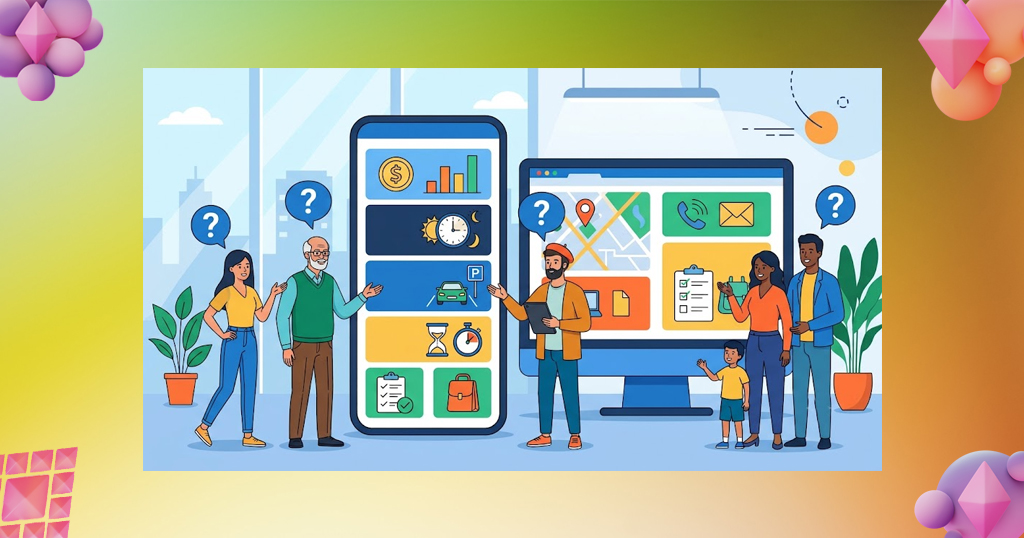
AI prompts are conversational, so your pages should answer real questions in plain language. Add a short FAQ to your key service and location pages. Think about what people ask before they buy: price ranges, opening hours, parking, how long a service takes, what to bring.
To find real questions, open Google Search Console, go to Performance, and look at the longer, conversational queries your site already appears for. Turn the best ones into page sections and into prompts for your monthly test.
Step 7: Make sure AI tools can access your content
Google says there are no extra requirements to appear in AI Overviews or AI Mode beyond the usual Search basics. Pages must be indexed and eligible to show with a snippet, and important content should be available as text, not locked inside images (Google: AI features and your website). Google’s newer optimization guide also notes that your site needs to be included in the Search generative AI setting in Search Console to be eligible (Google: optimizing for generative AI features). Check that:
- Your pages aren’t blocked by robots.txt or a noindex tag.
- You haven’t restricted snippets (for example, with a nosnippet tag) on pages you want featured.
- Your site is included in the Search generative AI setting in Search Console.
- Your pages load quickly and work on mobile.

Special schema markup isn’t required for Google’s AI features, so don’t spend money on “AI schema” tricks. Accurate, consistent information matters more.
Step 8: Strengthen your local relevance
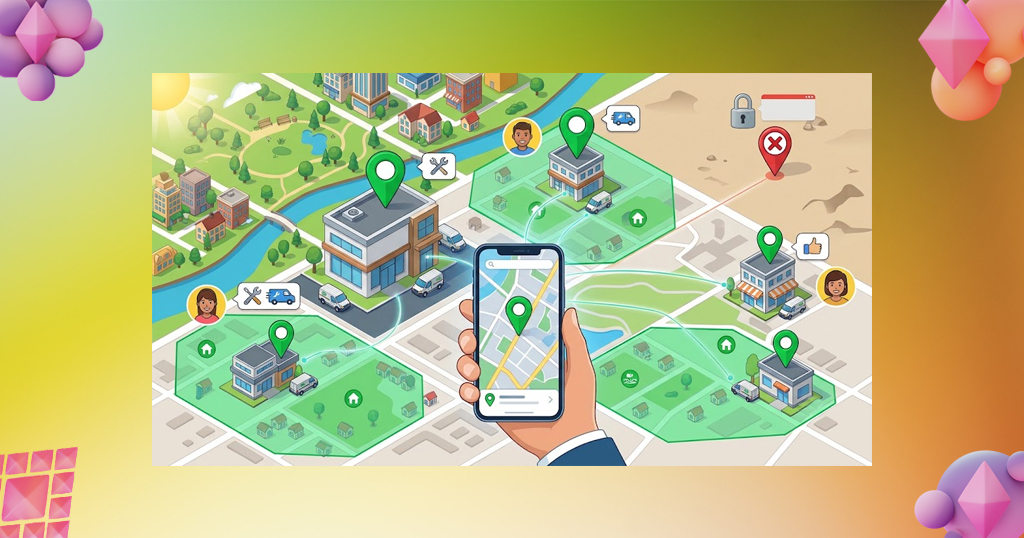
Location still matters. Google’s local results have long weighed how relevant a business is, how close it is to the searcher, and how prominent it is, and AI answers about local businesses tend to stay tied to the searcher’s area. Practical takeaways:
- State your address and service areas clearly on your website.
- Create location pages for each branch or area you genuinely serve.
- Service-area businesses should list the neighborhoods and cities they cover.
- Never fake an address or create fake locations. It breaks Google’s rules and can get your profile suspended.
Step 9: Keep your social profiles active and accurate
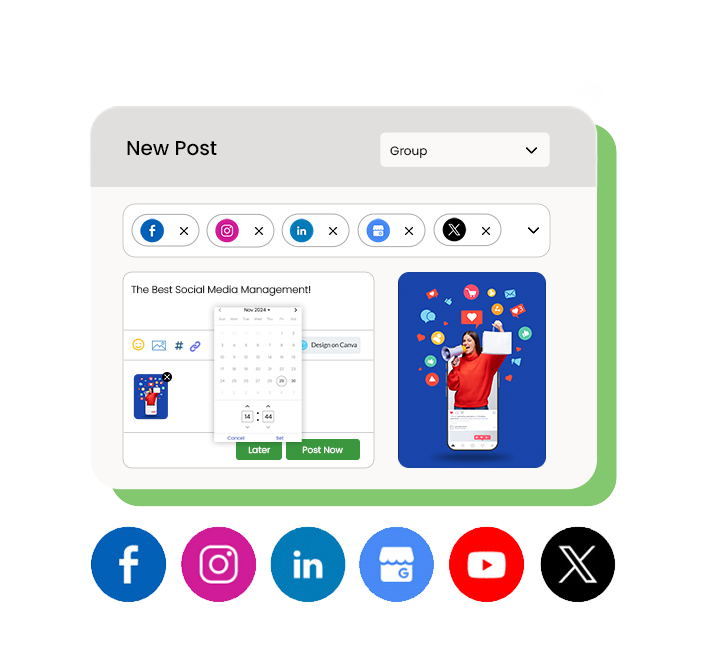
Customers check your social profiles after an AI recommendation, and social and review content is part of what AI reads. In Yext’s survey, about one in five AI users checked a business’s social media profiles before acting. Make sure your Facebook page has the correct name, address, hours, category, and a link to your website. Post regularly so the page looks alive, and keep your information in sync with your Google Business Profile. A scheduling tool such as Storefries makes it easier to publish consistently across channels, and our social media monitoring guide shows how to keep an eye on what people say about you.

Step 10: Track your AI visibility every month
You can’t improve what you don’t measure, so run a simple prompt test monthly. See the free method below. Compare results over time, note which competitors keep appearing, and look at which sources the AI cites for them. Then close the gaps.

How to Check Your AI Visibility for Free
A manual prompt test takes about 30 minutes a month and needs no special software. Dedicated tools can automate this at scale, but a spreadsheet is enough to start.
- Write 8 to 10 prompts a real customer might type. Mix types:
- “best [service] in [city].”
- “[service] near [neighborhood] open now”
- “affordable [service] in [city] for [type of customer].”
- “who is the most trusted [business type] in [city]?”
- Run each prompt on ChatGPT, Google AI Mode, and a regular Google search (to see AI Overviews). Use a logged-out or private window where possible, and test from your usual business location.
- Repeat each prompt two or three times, because answers vary.
- Record the results in a sheet like this:
| Date | Prompt | Platform | Were we named? (Y/N) | Other businesses named | Sources cited |
|---|
5. Calculate your mention rate: times named divided by total tests. Track it monthly.
6. Review the sources. If a competitor is cited on a directory where you’re missing, add yourself there.
For a more tool-based approach, our roundup of local SEO tools lists options for ranking and listing management.
Your 30-Day Action Plan
- Week 1: Fix the foundations. Verify and complete your Google Business Profile, then correct your NAP across your website and top directories.
- Week 2: Improve your website. Add or improve service pages, location pages, and FAQs. Confirm pages are indexable and your site is included in Search Console’s generative AI settings.
- Week 3: Expand your presence. Claim or update your Facebook page, Bing Places, Apple Business Connect and the two or three industry directories that matter for your sector. Start a steady review-request routine.
- Week 4: Measure. Run your first prompt test, record your mention rate, and pick the top three gaps to fix next month.
Mistakes to Avoid
- Chasing “AI hacks.” Google says the same SEO fundamentals apply, so focus on the basics.
- Judging by one search. AI answers change, so test multiple times and track trends.
- Ignoring your website. It’s the biggest source AI cites, so keep it clear and current.
- Inconsistent business details. Different names, addresses, or phone numbers across listings weaken trust and can lead to wrong answers.
- Faking reviews, addresses, or locations. These can get you penalized and lose customers’ trust.
- Only optimizing for Google. Different AI tools lean on different sources, so cover Yelp, Facebook, Bing, and relevant directories too.
- Never re-testing. AI tools change quickly, so check monthly.
FAQ
1. What is local AI visibility?
Local AI visibility is how often AI tools such as ChatGPT, Google AI Mode, and AI Overviews name your business when someone asks for a local recommendation. It works like local search rankings, but the answer is a short list instead of a long results page.
2. Does ranking in Google’s Map Pack guarantee that AI will recommend my business?
No. SOCi’s 2026 research on multi-location brands found ChatGPT recommended about 1.2% of locations, compared with about 35.9% appearing in Google’s local 3-Pack. Good local SEO helps, but you also need accurate, consistent information on the other sources AI reads.
3. Why does ChatGPT recommend different businesses each time I ask?
AI answers are generated fresh each time, so the list of businesses can change. SparkToro’s research found AI tools are highly inconsistent when recommending brands, which is why you should track trends over several tests instead of relying on one answer.
4. Do I need special schema or “AI SEO” markup?
No. Google’s guidance says there are no additional requirements or special optimizations needed to appear in AI Overviews or AI Mode. Your pages need to be indexed and eligible to show with a snippet, and your business information should be accurate and consistent.
5. Which sources do AI tools use for local businesses?
In Yext’s study of 6.8 million AI citations, about 44% came from business websites and about 42% from listings, with reviews and social making up about 8% and forums about 2%. The exact mix varies by platform, industry, and country.
6. How can I check whether AI recommends my business?
Write 8 to 10 realistic customer prompts, run them on ChatGPT, Google AI Mode, and Google Search, repeat each two or three times, and record whether your business is named and which sources are cited. Track your mention rate every month.
Keep Your Local Presence Active With Storefries
Local AI visibility depends on accurate, active profiles across the web, and social profiles such as Facebook are part of that picture. Storefries is an all-in-one social media tool that helps you schedule, grow, and track your channels from one dashboard, so your profiles stay fresh and consistent. Start your free Storefries trial and make your local presence easier to manage.


Leave A Comment